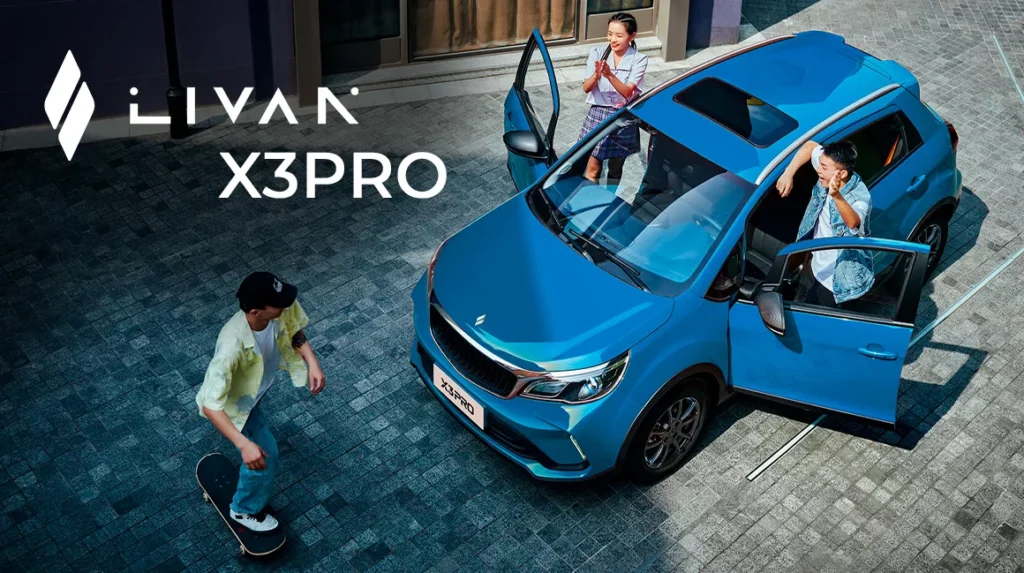
Something shifted in the past 18 months or so. The inquiries started coming in more frequently — buyers from Nigeria, Tanzania, the Philippines, Jordan, Ecuador — and a surprising number of them were specifically asking about the Livan X3 Pro. Not just “what Chinese SUVs do you have” but this model by name. That tells you something. Word travels in import communities, and when a vehicle earns a reputation for being reliable, affordable to run, and straightforward to get through customs without surprises, people talk. I’ve personally handled export paperwork on dozens of these units in the past year alone, and I’ve had enough post-delivery conversations with buyers to give you a genuinely honest picture of what you’re getting. This isn’t a press release. It’s a real look at a used Livan X3 Pro — the good, the occasional limitation, and why for a specific type of buyer in a specific type of market, this car is hard to beat right now.
Exterior & Interior Design – Does It Still Look Fresh?
The X3 Pro is a compact SUV, sitting at around 4,005mm in length. That puts it in the same general footprint as a Hyundai Tucson Sport or a compact Toyota RAV4 variant — but noticeably more maneuverable in dense urban traffic, which matters a lot in markets like Lagos or Manila where street widths aren’t always generous.
Design-wise, Livan went with clean, slightly sporty lines rather than anything aggressive or polarizing. The front fascia has a decent amount of visual presence — a wide grille, sculpted hood, and slim LED daytime running lights that give it a more contemporary look than the price point would suggest. It doesn’t look cheap. That’s genuinely one of the first things buyers comment on when they see photos of their actual unit before shipping. “It looks newer than I expected.” I hear that a lot.
Inside is where the X3 Pro earns its reputation in the domestic Chinese market. The cabin isn’t trying to mimic premium European interiors, but it’s well laid out — soft-touch panels in the right places, a reasonably sized central touchscreen, and seating that’s comfortable enough for daily driving without being punishing on longer trips. Rear legroom is genuinely adequate for a vehicle this size. Families can use this car. It’s not just a runabout.
Used examples with 20,000 to 40,000 km typically show very little interior wear if they’ve been privately owned. The plastics hold up, the seat fabric doesn’t fray early, and the infotainment systems tend to still function cleanly — which isn’t always the case with some competing models at similar mileage.
Performance & Driving Experience of the Used Livan X3 Pro
Let’s talk honestly about the engine. The X3 Pro runs a 1.5-liter naturally aspirated gasoline engine making 113 horsepower. That’s not a power figure that’s going to impress anyone at a drag strip. It’s not meant to. What it’s meant to do is move a reasonably light compact SUV efficiently and reliably in everyday conditions — and that’s exactly what it does.
Around town, the power delivery is smooth and linear. The CVT transmission option makes city driving genuinely effortless — no hunting for gears, no jerky transitions in stop-and-go. For buyers who prefer more control, there’s also a manual gearbox option available on certain trim levels, which tends to be more popular in markets where driving conditions demand more direct input from the driver.
Highway performance is adequate. Merging onto fast roads takes a moment — you need to plan your entry slightly more than you would in a turbocharged SUV — but at cruising speeds it settles in comfortably and fuel consumption drops noticeably. Real-world fuel economy sits around 6.5 to 7.5 liters per 100km depending on conditions. In practical terms, for fleet operators or small business owners putting serious daily kilometers on a vehicle, that running cost difference versus a larger-engined competitor adds up fast over a year.
The ride quality is tuned soft, which is deliberate. On rough roads — and I mean genuinely rough, the kind you’d find in a lot of secondary cities across Africa and Southeast Asia — this car absorbs impact reasonably well without feeling floaty on smoother surfaces. It’s a practical compromise, and one that most buyers in those markets genuinely appreciate once they’re driving it.
Key Specs & Features That Matter for Export Buyers
- Engine: 1.5L naturally aspirated inline-4, 113hp — reliable, straightforward to service, widely understood by mechanics outside China
- Transmission: CVT automatic or 5-speed manual depending on trim — both available in export stock
- Body Length: ~4,005mm — compact enough for urban markets, spacious enough for family use
- Fuel Economy: 6.5–7.5L/100km real-world average — one of the more economical options in its class
- Infotainment: Touchscreen display with reverse camera standard on most mid and upper trims
- Safety Features: Dual front airbags, ABS with EBD, tire pressure monitoring — solid baseline for export market compliance
- Ground Clearance: Approximately 175–180mm — handles mixed road surfaces without bottoming out
- Cargo Space: Practical rear cargo area with foldable rear seats — useful for buyers with commercial or family cargo needs
Pros and Cons – Real Talk from Someone Who Exports These Cars
What works well: The fuel economy is genuinely one of the best in class for the price point. Maintenance parts are available and inexpensive — that’s not something you can take for granted with every Chinese brand entering export markets. The compact footprint makes it versatile. Low-mileage used examples from China are in solid mechanical condition. And the price-to-specification ratio on a used Livan X3 Pro is hard to argue with when you lay it out against alternatives.
Where it falls short: The 113hp engine will feel underpowered to anyone coming from a turbocharged vehicle or a larger displacement engine. It’s not a car for aggressive driving or towing. The brand recognition is still limited in some markets, which can affect resale value if the local used car ecosystem doesn’t yet have strong familiarity with Livan as a nameplate. And like most Chinese domestic-spec vehicles, some models may require minor adaptation work depending on destination country emissions or lighting standards — that’s something you want confirmed before shipping, not after.
I’d also say: if your priority is maximum power or brand prestige, this isn’t your car. If your priority is getting a reliable, fuel-efficient, well-equipped compact SUV into your market at a price that makes the economics work — this one deserves serious consideration.
Why Used Livan X3 Pro is a Smart Choice for Buyers Importing from China
The core logic here isn’t complicated. Chinese consumers depreciate vehicles fast. A Livan X3 Pro with 25,000 km on it and a clean service history has absorbed most of its value drop already — but mechanically, it’s nowhere near the end of its useful life. The engine in this car, properly maintained, will comfortably run 200,000 km or more. You’re essentially buying the reliable middle stretch of a vehicle’s life at a fraction of new car pricing.
For markets where a new comparable SUV might cost $18,000 to $22,000 USD after import duties and local taxes, a used Livan X3 Pro exports from China in the $7,000 to $11,000 range depending on year, mileage, and trim — and that gap is significant for individual buyers, fleet operators, and commercial vehicle resellers alike. When the math works that cleanly, it’s not surprising that buyers are paying attention.
The other piece that matters: Livan X3 Pro exports from China have been increasing steadily, which means the supporting infrastructure — parts availability, service familiarity, documentation pathways — is maturing. That’s meaningful for buyers who think beyond the purchase and consider what happens when they need a part 18 months later.
Why Choose Panda Used Cars for Your Used Livan X3 Pro
There are a lot of people who will tell you they export Chinese used cars. Fewer of them actually control the sourcing, inspection, and documentation chain from beginning to end. Panda Used Cars has been doing this long enough to have worked through all the ways these transactions can go sideways — and built processes specifically to prevent them.
Every used Livan X3 Pro we export goes through a pre-shipment inspection with documented photo records. You see the actual vehicle, the actual odometer, the actual condition before anything moves. Title clearance, export customs declaration, Bill of Lading coordination — all handled in-house. We’ve shipped to ports across West Africa, East Africa, the Gulf, Southeast Asia, and beyond, and we know what documentation each market requires. We don’t learn that on your shipment. We already know it.
And after the car arrives? We’re still reachable. That matters more than most buyers realize until they’ve had a bad experience with a supplier who disappears post-payment.
If you’re serious about importing a used Livan X3 Pro, tell us your destination port, preferred mileage range, and timeline. We’ll come back to you within 24 hours with real stock, real pricing, and real answers. Contact us today.