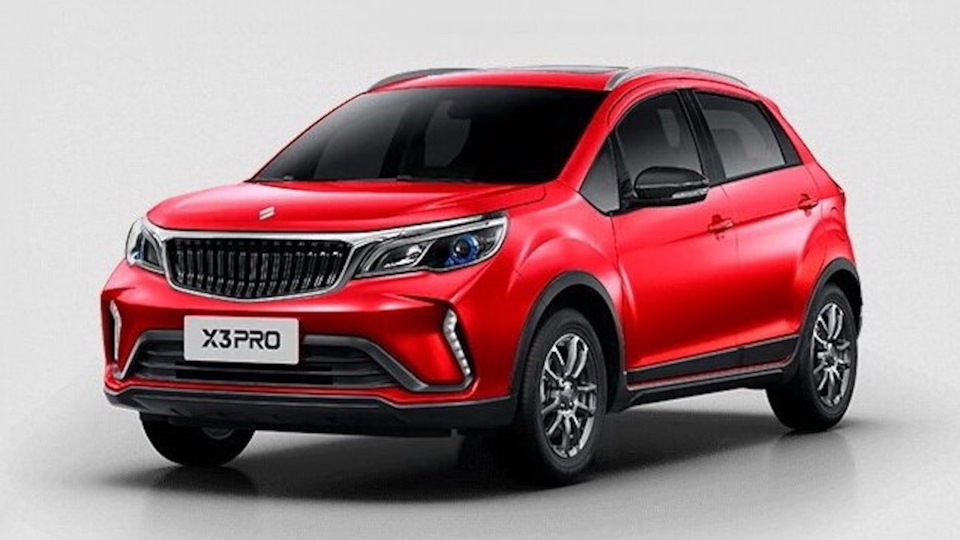
Every week I talk to buyers from Nigeria, Kenya, the Philippines, Chile, UAE — and almost without exception, the first real question underneath all the other questions is some version of: “But is it actually going to last?” That’s a fair question. Chinese brand vehicles have carried a reputation in some markets that, honestly, was earned by earlier-generation products that weren’t as refined as what’s rolling off production lines today. The automotive manufacturing gap between Chinese brands and Japanese or Korean competitors has closed substantially in the last decade — measurably, not just as a marketing claim. The Livan X3 Pro is a product of that more mature manufacturing era. So let me give you the honest picture on used Livan X3 Pro reliability, because “honest” is the operative word here. There are things this vehicle does exceptionally well over the long haul. There are also a couple of areas where informed ownership makes a real difference. I’d rather walk you through both upfront than have you find out the hard way six months after your container clears the port.
What Real Overseas Owners Say About the Used Livan X3 Pro
We’ve shipped Livan X3 Pro units across multiple markets over the past couple of years, and the post-delivery feedback loop we maintain with buyers is genuinely one of the most useful data sources I have when writing something like this. The consistent themes in what buyers tell us after six to twelve months of real-world use are actually pretty reassuring.
The word that comes up most often is “solid.” Not flashy, not perfect in every detail — solid. The body doesn’t develop the rattles and creaks that some buyers associate with budget-tier vehicles. On rougher roads — and several of our buyers are running these vehicles in West African and East African conditions that would stress-test anything — the chassis feels composed. One buyer in Tanzania told me the X3 Pro handled a long rural road stretch better than a higher-mileage Japanese SUV he’d owned previously. That’s anecdotal, but it’s consistent with what the structure and build quality of the vehicle would lead you to expect.
Where buyers occasionally push back is on infotainment glitches and minor electronic quirks — more on that in a moment. But on the fundamentals — does it start, does it drive, does it stop, does it hold together — the feedback on Livan X3 Pro long-term ownership has been genuinely positive across the markets we serve.
Engine & Transmission Longevity – What to Expect After 100,000 KM
The 1.5L naturally aspirated engine in the Livan X3 Pro is, in my experience, the vehicle’s strongest reliability asset. It’s not a complex, highly strung turbocharged unit trying to extract maximum performance from minimum displacement. It’s a straightforward, well-proven engine design that, with regular oil changes and basic maintenance, is genuinely capable of running well past 150,000 kilometers without major intervention. That’s not a marketing number — that’s consistent with what we see from similar Geely-platform engines across multiple model lines.
The key word, as always, is maintenance. This engine rewards owners who stick to oil change intervals. It does not reward owners who run it 15,000 km past the service point on cheap oil in high-heat environments. Treat it right and it’ll return the favor for a very long time.
The CVT transmission is where I want to be a little more specific with you. CVTs in general require more attention in high-temperature operating environments than traditional automatics or manuals. The Livan X3 Pro’s CVT is a competent unit, but if you’re operating in a market where ambient temperatures regularly hit 35-40°C — which describes a lot of the markets we export to — there are two things to stay on top of: CVT fluid changes on schedule (don’t skip these, they’re cheap relative to what a CVT repair costs), and avoiding sustained high-load driving in extreme heat without giving the transmission time to cool. City stop-start driving is actually gentler on CVTs than prolonged steep-grade climbing at high temperatures. Buyers in hilly regions should be particularly aware of this. It’s not a defect; it’s just operating physics applied to a specific component type.
Common Issues & How to Avoid Them (Real Talk)
I’d be doing you a disservice if I skipped this section or kept it vague. Here’s what we’ve actually seen and heard:
- Infotainment system occasional glitches: The touchscreen multimedia unit can occasionally freeze or require a reset, particularly on older software versions. This is a known characteristic, not a catastrophic failure. In most cases a system reset resolves it, and software updates when available help. It’s annoying, not serious. Don’t let a dealer use this to talk you into a full system replacement.
- CVT fluid degradation in high-heat environments: As mentioned above. The fix is preventive and cheap — stick to the manufacturer’s CVT fluid change schedule, or slightly shorten the interval if you’re operating in extreme heat. Don’t wait for symptoms before servicing the transmission.
- Minor sensor warnings: Some units generate intermittent warning lights related to tire pressure sensors or minor emission system items. In most cases these are sensor calibration issues rather than actual mechanical problems. A diagnostic scan clarifies this quickly and is worth doing at your first local service appointment after import.
- Paint on lower door edges and wheel arches: On units sourced from regions where road salt or gravel exposure was more common, minor stone chips or light surface rust on the very lower bodywork edges can appear. This is cosmetic and addressed easily during pre-export prep, but it’s something we check on every unit we source.
- Cabin plastic trim: The interior hard plastics, particularly around the center console and door panels, can show wear on higher-mileage units. This is aesthetics, not function — but it matters for resale perception. On low-mileage units we source, this is rarely an issue worth worrying about.
None of these are structural or safety issues. The engine, chassis, suspension, and braking systems — the things that determine whether a vehicle is actually reliable — hold up well. The issues above are almost entirely in the electronics and cosmetics category, which is a very different kind of problem to have.
Maintenance Costs & Tips for Export Buyers
One of the practical advantages of the Livan X3 Pro that doesn’t get talked about enough is that it runs on standard consumables. Oil filters, air filters, brake pads, belts — these are generic-specification parts that aren’t proprietary or hard to source. In markets where Livan isn’t yet widely represented by authorized dealers, this matters a lot. A local mechanic with basic competency can service this vehicle without specialized tooling or brand-specific parts availability.
Budget roughly $80–$150 USD per year for routine maintenance on a low-mileage unit — oil change, filters, basic inspection. That’s assuming you’re not doing anything unusual. Brake pads and tires are additional as needed, but wear rates on a low-mileage vehicle are minimal for the first few years of your ownership.
One practical tip I always give buyers: before your vehicle leaves China, ask for a pre-export service — fresh oil, filter, and a basic inspection report. We do this as standard on units we handle. You want the vehicle starting its imported life with fresh fluids and a clean baseline, not carrying over whatever the previous owner’s last service interval was.
Why Used Livan X3 Pro is More Reliable Than You Think
The honest case for used Livan X3 Pro reliability starts with understanding what you’re actually comparing against. A 2022 Livan X3 Pro with 30,000 km is a newer vehicle with a more current safety and emissions spec than a 2018 Toyota Rush with 90,000 km — which is often the actual comparison in the markets where we sell. Livan X3 Pro exports from China bring buyers newer platform technology, lower cumulative wear, and Chinese urban driving patterns that produce genuinely low mileage vehicles at competitive prices.
Livan (part of the Geely Auto ecosystem) has benefited from Geely’s significant investment in manufacturing quality standards over the past decade. The X3 Pro platform reflects that. It’s not a hand-assembled boutique product, but it’s also not the cut-corner budget build that some buyers still associate with Chinese automotive manufacturing from 10 or 15 years ago. The quality control on Geely-affiliated production lines is documented and measurable, and it shows in how these vehicles actually perform in service over time.
When buyers compare the used Livan X3 Pro cost against similarly aged and mileaged Japanese or Korean compact SUVs from China’s domestic market, the Japanese or Korean unit typically costs $2,000–$4,000 more. For that premium you get a brand name. On actual reliability metrics for vehicles in this condition and age range? The gap is much smaller than the price gap would suggest.
Why Choose Panda Used Cars for Your Reliable Livan X3 Pro
Reliability on a used vehicle isn’t just about the model — it’s about what happened during the sourcing and inspection process before the car got on the boat. A well-maintained Livan X3 Pro sourced carelessly is a worse bet than a slightly higher-mileage unit that’s been properly inspected, serviced, and documented. That’s where the sourcing partner you work with actually matters.
At Panda Used Cars, we physically inspect every unit before purchase — not a remote check, not a photo review. Engine condition, transmission behavior, electronics function, bodywork, documentation. We run a pre-export service on every vehicle so you know it’s starting fresh. And we provide a real inspection report on the actual unit you’re purchasing, not a generic template with checkboxes.
We’ve been doing Livan X3 Pro exports from China long enough to know which supply sources produce consistently well-maintained units and which ones cut corners. That knowledge isn’t something you can Google — it comes from doing this over and over and maintaining honest relationships with buyers who tell you what happens after delivery.
If you want to know the current condition and availability of used Livan X3 Pro units in our inventory — including mileage, year, trim, and a full pre-export inspection summary — reach out to us directly. We’ll give you a straight answer within 24 hours. Contact us today.