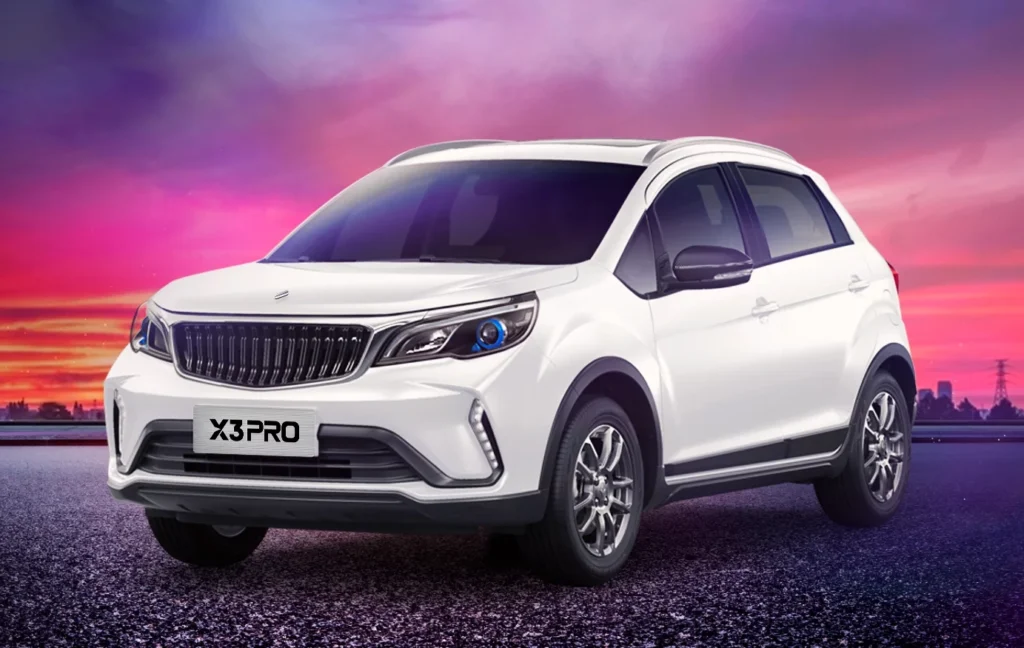
If you’ve spent any time shopping for a compact SUV to import from China, you already know the decision isn’t simple. The options have multiplied dramatically in the last few years — Geely, Chery, Changan, plus the usual Korean and Japanese names that have been competing in emerging markets for decades. Every brand has a pitch. Every dealer has a reason why their car is the one you should be putting in a container. After twelve years of doing this, I’ve learned that most buyers don’t actually need the “best” car on paper — they need the best car for their specific situation: their budget, their market, their ability to get parts and service locally, and what they plan to do with the vehicle over the next three to five years. So let’s have a real conversation about where the used Livan X3 Pro actually sits against its main competition, because I’ve handled enough of these exports to give you a picture that’s honest rather than just promotional. Some competitors do certain things better. The X3 Pro wins in ways that matter for most of the buyers I work with. Let me show you the full picture and let you decide.
Quick Overview: Livan X3 Pro vs Top Competitors
The vehicles we’re actually comparing here are the ones that consistently come up when overseas buyers are doing their homework: the Geely Coolray, Chery Tiggo 5x and Tiggo 7, Changan CS35 Plus, and — as the international reference point — the Hyundai Creta and Kia Seltos. These aren’t random picks. They’re the vehicles that show up in the same buying conversations, often competing for the same buyer’s dollar.
The Geely Coolray is probably the most direct competitor in terms of positioning and platform heritage. The Chery Tiggo lineup has strong brand recognition in Latin America and parts of the Middle East. The CS35 Plus is Changan’s competitive answer to the same segment. And the Hyundai Creta and Kia Seltos serve as the “safe choice” international benchmarks that a lot of buyers use as a reference when evaluating Chinese brands.
What I’m going to do is walk through the dimensions that actually matter for an import buyer — not just spec-sheet numbers, but things like export availability, parts accessibility in destination markets, and total cost of ownership once the vehicle is actually in your hands and on your roads.
Price & Value Comparison – Where Does the Livan X3 Pro Shine?
Let’s start with money, because it’s usually where the conversation starts anyway. On the used market in China right now, a well-maintained 2022–2023 Livan X3 Pro with 20,000–40,000 km typically lands in a price range that’s meaningfully lower than a comparable-year Geely Coolray with similar mileage. The Coolray has stronger brand equity internationally, and that premium shows up in the asking price even for used units. You’re often paying $1,500–$2,500 more for the badge and the slightly more polished brand story.
Chery Tiggo 5x used units are fairly price-competitive with the X3 Pro, but the Tiggo 7 — which is a step up in size — comes in at a higher price point that puts it in a different budget category for most buyers. The CS35 Plus sits close to the X3 Pro in price but has seen more variable quality consistency in the used market, depending heavily on prior ownership history and which production year you’re looking at.
Now compare any of those to a used Hyundai Creta or Kia Seltos sourced from China’s domestic market. Suddenly you’re often looking at $3,000–$5,000 more for a vehicle that may not be meaningfully newer or lower-mileage. The Korean brands carry a premium in China’s used market too, driven by local buyer preference. For an export buyer who can evaluate the actual vehicle rather than the badge, that’s a gap that’s hard to justify.
For buyers working with a defined budget — which is most buyers — the used Livan X3 Pro delivers more vehicle per dollar than almost anything else in the segment sourced from China’s current used market.
Performance, Fuel Economy & Real-World Driving
The Livan X3 Pro runs a 1.5L naturally aspirated engine. I want to address something directly here: the Geely Coolray uses a 1.5T turbocharged unit, and on paper that looks more impressive. Turbos make better spec sheets. What they don’t always make is better real-world ownership stories in markets where fuel quality is inconsistent and high-quality service centers for turbo-specific maintenance aren’t everywhere.
The X3 Pro’s naturally aspirated engine is simpler. Fewer failure points. More forgiving of the fuel quality variation you encounter in a lot of the markets these vehicles end up in. Fuel consumption in real-world mixed driving runs around 7.5–8.5L per 100km, which is competitive with everything in this class. The Chery Tiggo 5x is in a similar range. The Coolray’s turbo actually returns comparable or slightly better economy on paper, but the maintenance overhead when something does go wrong is higher.
The Changan CS35 Plus and the Tiggo 7 both offer turbocharged variants too. Same tradeoff applies. For buyers in markets with strong dealer networks and reliable fuel supply, the turbo options are genuinely viable. For buyers who need something that a competent local mechanic can service without specialized equipment — which is the honest reality of most import markets — the X3 Pro’s drivetrain philosophy is actually a feature, not a limitation.
Space, Features & Daily Usability
Here’s where I’ll give the Tiggo 7 its due: it’s a larger vehicle with more rear legroom and cargo capacity than the X3 Pro. If you’re moving a large family regularly or need SUV cargo volume, the Tiggo 7 earns its price premium. But for most urban and mixed-use buyers, it’s more car than they need, and the fuel and maintenance costs reflect that.
For the segment the X3 Pro actually competes in — compact SUVs for urban and suburban use — here’s how the daily usability comparison actually plays out:
- Interior space: X3 Pro has adequate rear legroom for four adults comfortably; Coolray is slightly more cramped in the rear despite similar exterior dimensions; CS35 Plus is comparable to the X3 Pro in real interior volume.
- Cargo area: The X3 Pro’s flat-folding rear seats give it genuinely flexible cargo utility — better than the Creta and comparable to the Seltos in practical terms.
- Infotainment: The X3 Pro’s 10.25-inch touchscreen system is well-specified for the segment. Coolray’s infotainment is slightly more polished in UX terms. CS35 Plus and Tiggo 5x are broadly comparable to the X3 Pro here.
- Driver assistance features: Lane departure warning, automatic emergency braking, and a 360-degree camera system come standard on X3 Pro trims that in the used market cost less than stripped competitor units. This is a genuine differentiator.
- Ground clearance: At 190mm, the X3 Pro handles moderate off-road and rough road conditions well. This matters more than most spec sheets suggest for buyers in markets where road conditions are variable.
- Ride quality: Suspension tuning on the X3 Pro is on the softer, more compliant side — better for rough road comfort than the slightly sportier Coolray setup, which can feel crashy on broken pavement.
Reliability & Long-Term Ownership Costs
I covered Livan X3 Pro reliability in depth in a separate article, so I won’t repeat everything here — but the comparison dimension is worth addressing specifically. The Hyundai Creta and Kia Seltos have longer international track records, and that’s a real advantage in markets where buyers and mechanics are already familiar with the platform. That familiarity has value. I don’t want to dismiss it.
But what the Korean vehicles also have is a significantly higher entry cost, and in the used market sourced from China, the condition and maintenance history gap between a well-sourced X3 Pro and a comparable Korean compact is often smaller than buyers assume. A 2022 X3 Pro with 30,000 km from careful urban ownership is a more reliable purchase than a 2020 Creta with 75,000 km of mixed use, regardless of brand reputation.
The Chery Tiggo lineup has had some noted quality consistency issues in earlier production runs — particularly around electrical systems in the 2019–2021 period. More recent units are better, but the used market still contains older inventory and buyers need to be careful about the year and trim they’re sourcing. The Geely Coolray is genuinely well-built but commands a premium that narrows its value proposition on the used market.
For long-term ownership cost, the X3 Pro’s naturally aspirated drivetrain, standard-spec consumables, and increasingly available parts supply in major import markets make it one of the more financially predictable choices in the segment.
Why Used Livan X3 Pro Wins for Most Overseas Buyers
If I’m being direct about it — and that’s kind of the whole point of this article — the used Livan X3 Pro consistently wins for buyers who are optimizing for total value rather than badge recognition. Livan X3 Pro exports from China have grown steadily because buyers in destination markets are making repeat purchases and recommending the vehicle to others. That’s the most credible reliability data point available.
It’s not the right choice for every buyer. If brand resale value in your local market is a primary concern and Geely or Hyundai have stronger recognition there, those factors matter for your specific situation. If you need genuinely large SUV space, look at the Tiggo 7. But for the buyer who wants a well-equipped, reliable, fuel-efficient compact SUV that arrives in genuine condition at a price that leaves room in the budget for other things — the X3 Pro is the most consistently good answer I can give from twelve years of doing this.
Why Choose Panda Used Cars for Your Livan X3 Pro
Sourcing any used vehicle from China is only as good as the process behind it. The comparison I’ve laid out above assumes you’re getting a vehicle that is what it says it is — accurate mileage, honest condition report, no hidden history. That assumption isn’t always warranted when you’re buying across borders and can’t physically inspect the car yourself.
At Panda Used Cars, physical inspection isn’t optional — it’s how we operate on every single unit. We know the used Livan X3 Pro inventory in China’s domestic market well enough to filter out the units that have been in accidents, had their odometers tampered with, or sat in storage in conditions that damaged the seals or electrical systems. We also handle the export documentation, pre-shipment servicing, and compliance requirements for the major destination markets we regularly serve.
If you’re comparing the X3 Pro against other vehicles and want a frank conversation about whether it’s the right fit for your specific market and use case, that’s exactly the kind of conversation we’re set up to have. We’ll tell you when another vehicle is a better fit. That’s not how most exporters operate, but it’s how we’ve built a business that runs on repeat buyers and referrals.
Get in touch with us at Panda Used Cars today — tell us your market, your budget, and what you need the vehicle to do, and we’ll give you an honest recommendation and current inventory availability within 24 hours. Contact us today.