Livan X3 Pro Exports from China: Step-by-Step Guide for Overseas Buyers
I get messages every week from buyers who’ve done their research, know what they want, and are ready to move — but they’re stuck on the same question: how does this actually work? How do you go from “I want a used Livan X3 Pro” to having it sitting on a dock in your country, cleared, ready to drive? And behind that question is usually a second one they’re too polite to ask directly: how do I know I won’t get burned? That’s a fair concern. The used car export business from China has its share of bad actors — people who take deposits, send low-quality vehicles, or disappear when documentation problems show up. So before I walk you through the process, let me just say this: if you understand how Livan X3 Pro exports from China are supposed to work — every step, every document, every decision point — you’re already in a much stronger position. Knowledge is protection. And that’s exactly what this guide is for.
Why More Buyers Are Importing Used Livan X3 Pro from China
The short version: the price gap is real, and buyers have figured that out.
A used Livan X3 Pro from China — decent mileage, solid condition, mid-level trim — typically lands in the $7,000 to $11,000 USD range before shipping and duties. Compare that to what a new equivalent compact SUV costs in most African, Middle Eastern, or Southeast Asian markets after local taxes and import fees, and you’re often looking at a difference of $8,000 to $12,000. That’s not a rounding error. That’s a fundamentally different financial proposition for a fleet buyer, a small business owner, or a family trying to get a reliable vehicle without taking on punishing debt.
But it’s not just price. The Livan X3 Pro specifically has been gaining traction in import communities because it’s practical in ways that matter on the ground. The 1.5-liter engine is simple to service — mechanics outside China can work on it without exotic tooling or proprietary diagnostics. Parts availability has been improving steadily as Livan X3 Pro exports from China have increased. And low-mileage Chinese domestic-market vehicles are often in genuinely better condition than used Japanese or Korean equivalents at similar price points, largely because highway driving dominates in many Chinese urban corridors and owner maintenance habits tend to be solid.
Word has traveled. That’s why the inquiries keep coming.
Step 1: Sourcing the Right Used Livan X3 Pro
This is where a lot of deals go wrong before they even start. Not every used Livan X3 Pro from China is the same, and sourcing quality varies enormously depending on who’s doing the buying.
The best vehicles come from individual owners — private sales from people who bought new, maintained the car properly, and are upgrading. These units typically have documented service histories, lower mileage (often under 40,000 km), and no hidden accident damage. Auction-sourced vehicles can also be fine, but you need someone who knows how to read auction sheets and isn’t just chasing the cheapest price on the lot.
What to look for: mileage under 50,000 km is the sweet spot for export buyers — enough life left to justify the investment, low enough that mechanical wear isn’t yet a concern. Year models from 2021 onward tend to have the updated trim configurations that overseas buyers respond to most positively. And transmission choice matters — know whether your market prefers CVT or manual before committing to a specific unit, because changing your mind after sourcing creates delays and costs.
A good sourcing partner isn’t just finding you a car. They’re filtering out the ones with rolled-back odometers, flood histories, or structural repairs that don’t show up unless someone’s actually looked under the car in person.
Step 2: Full Inspection and Quality Assurance
No photos substitute for a physical inspection. I’ve said this to every buyer I’ve worked with, and I’ll keep saying it because it’s true.
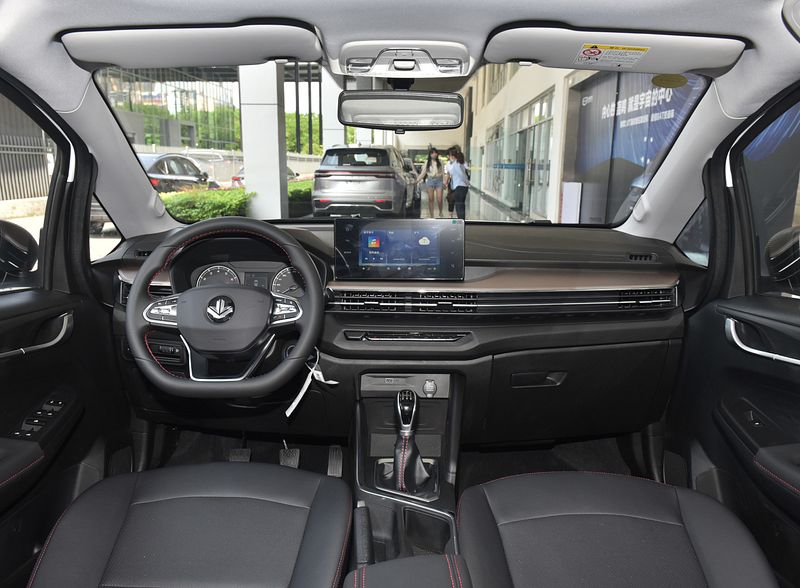
A proper pre-export inspection of a used Livan X3 Pro covers the mechanical systems — engine, transmission, brakes, suspension — as well as bodywork for previous collision repair, paint condition, interior wear, and electronic systems including the infotainment, climate control, and warning light status. It also means checking the chassis number against the title documentation to confirm they match. That check alone has caught problems on vehicles that looked perfectly fine on the surface.
The inspection report should include timestamped photos of the actual vehicle — not stock images, not a similar model — with odometer visible, all four panels, engine bay, and interior. If a supplier can’t or won’t provide this, that’s your answer right there.
Some buyers ask about third-party inspection agencies. They exist and can be useful, but they’re an added cost and coordination layer. What matters most is that whoever is doing the inspection has no financial incentive to hide problems — which is why combining the sourcing and inspection functions under one accountable party, rather than splitting them, often produces better outcomes.
Step 3: All Export Paperwork Made Simple
Documentation is where the process gets intimidating for first-time importers. It doesn’t need to be. Here’s what a standard Livan X3 Pro export from China requires:
The Commercial Invoice establishes the transaction — vehicle details, buyer and seller information, declared value. This document follows the car through every stage of its journey and will be scrutinized by customs at destination. The declared value needs to be accurate; undervaluing to reduce import duties is a risk that can result in penalties, seizure, or both — and it’s not a risk a legitimate exporter should be asking you to take.
The Bill of Lading is your ownership document during transit. It’s issued by the shipping line and confirms the cargo details, vessel, port of loading, and destination. Hold onto this — you can’t clear customs without it.
The Certificate of Origin certifies the vehicle was manufactured in China. Some destination countries have preferential duty rates tied to origin — knowing whether yours does can save money.
Additional documents depending on destination may include a Vehicle Title/Registration from the Chinese side, a Deregistration Certificate confirming the car has been formally removed from Chinese plates, and destination-specific compliance certificates. Some markets — particularly in West Africa and parts of the Gulf — have specific age or emissions requirements, and those need to be confirmed before sourcing begins, not after.
Step 4: Shipping from China to Your Door
Most used Livan X3 Pro units export via container — either in a shared container (LCL, less-than-container load) or a dedicated 20-foot or 40-foot container if you’re moving multiple vehicles. For single-vehicle buyers, LCL is typically the cost-effective path. For dealers buying in quantity, a full container makes more economic sense per unit and reduces the handling touchpoints, which generally means fewer opportunities for damage in transit.
Major Chinese export ports for automotive cargo include Tianjin, Shanghai, Guangzhou, and Qingdao. Your destination port determines which origin port makes the most logistical and cost sense — shipping from Guangzhou to West Africa follows different routing than Tianjin to the Gulf, for example.
Transit times vary. West Africa typically runs 25 to 35 days from loading. East Africa is similar. Southeast Asia can be 10 to 20 days depending on routing. The Gulf runs 15 to 25 days. These are generalizations — actual booking confirmation will give you specific vessel schedules. Marine insurance is not optional. A used Livan X3 Pro worth $9,000 crossing an ocean without cargo insurance is an unnecessary gamble. The premium is modest; the exposure without it is not.
Step 5: Customs Clearance & Final Delivery
Customs clearance is the buyer’s responsibility in most import jurisdictions — but how prepared you arrive at that stage depends entirely on how well your export partner prepared the documentation on the China side. Incomplete paperwork, mismatched vehicle details, or missing deregistration documents are the most common causes of clearance delays, and they’re all preventable.
Know your destination country’s import duty structure before you finalize the purchase. Some markets tax on CIF value (Cost, Insurance, Freight), some on FOB. Some have age restrictions — vehicles over 5 years old cannot be imported in certain markets, which affects which model years are eligible. Some markets require destination inspection upon arrival before registration is granted.
Having a licensed customs broker at the destination end is strongly recommended. They understand local procedures, relationships with port officials, and can navigate delays that would take an inexperienced importer weeks to resolve. Your exporter should be able to provide you the complete, accurate documentation package that a competent customs broker can work with efficiently.
Why Choose Panda Used Cars for Your Livan X3 Pro Export
There’s no shortage of people who will tell you they can export a used Livan X3 Pro from China. The question is who controls the entire chain — sourcing, inspection, documentation, freight booking, and post-shipment support — and who’s accountable when something needs to be resolved.
Panda Used Cars handles the full process in-house. We source vehicles through vetted channels, conduct physical pre-export inspections with full documentation, prepare every export document accurately, coordinate freight with reliable shipping partners, and stay reachable after the car lands. We’ve shipped to ports in Nigeria, Ghana, Tanzania, Kenya, the UAE, Saudi Arabia, the Philippines, and beyond — each market has its own requirements, and we know them because we’ve worked them, not because we read about them.
First-time importers get the same level of attention as repeat dealers. We explain every step as it happens. You’ll know where your vehicle is from the moment it’s confirmed to the moment it clears customs at destination. And if something unexpected comes up in the documentation or clearance process — because sometimes it does — we don’t go quiet. We work it through with you.
That’s not a marketing promise. It’s just how we operate.
Ready to move forward? Tell us your destination port, how many units you need, your preferred mileage range, and your timeline. We’ll come back to you within 24 hours with real stock, accurate landed cost estimates, and a clear plan. Contact us today.