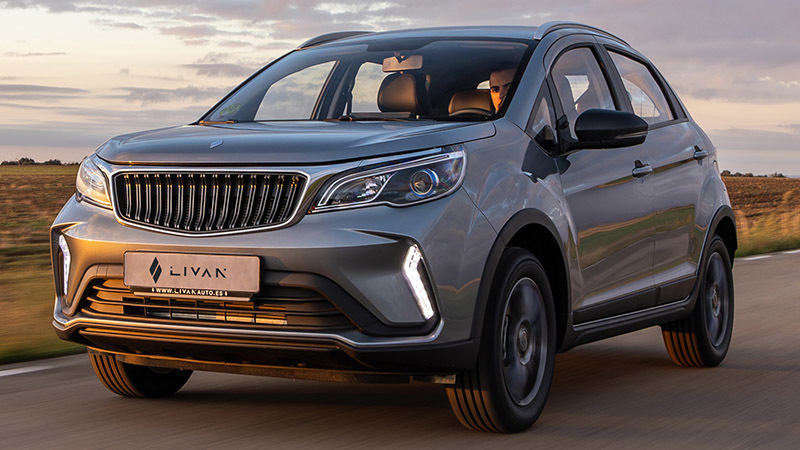
Let me be straight with you from the start: the used Livan X3 Pro price question is one I get almost every week from buyers in Africa, Southeast Asia, the Middle East, and beyond. And the honest answer is — it depends, but not in a vague, frustrating way. It depends on specific, knowable factors that I’m going to walk you through in this guide. What I can tell you right now is that the value proposition on a low-mileage used Livan X3 Pro in 2026 is genuinely strong. China’s domestic auto market is saturated with relatively recent, lightly used vehicles coming off short-term ownership, lease returns, and fleet rotations. That supply pressure keeps prices competitive in ways that benefit import buyers significantly. A compact SUV with modern safety features, decent fuel economy, and under 40,000 kilometers on the clock — at the price point we’re going to discuss — is hard to match from any other source market right now. The numbers speak clearly once you lay them out properly, which is exactly what this guide does.
Current Market Price for Used Livan X3 Pro in China (2026 Update)
The Livan X3 Pro launched in the Chinese domestic market at a starting price in the range of roughly 70,000 to 90,000 RMB new — somewhere between $9,500 and $12,500 USD at current exchange rates, depending on trim level. That new-car baseline matters because it sets the depreciation context for what you’re actually getting when you buy used.
In 2026, a used Livan X3 Pro at low mileage — let’s say 20,000 to 45,000 km, which is genuinely light use for a vehicle of this age — is trading in the Chinese domestic used car market at roughly $7,500 to $12,000 USD depending on year, mileage, trim configuration, and overall condition. A 2022 or 2023 model with under 30,000 km in solid condition sits comfortably in the $8,500 to $11,000 range. Slightly older, slightly higher mileage units can come in below $8,000, and that’s where some of the sharpest value is for buyers who aren’t fixated on having the newest possible model year.
Here’s something a lot of first-time importers don’t fully appreciate: Chinese car owners in urban markets tend to drive less than people expect. Traffic in Beijing, Shanghai, Chengdu — it’s brutal. A lot of owners are putting 8,000 to 12,000 km a year on their vehicles, which means a three-year-old car might genuinely have under 35,000 km. That’s not a manipulated odometer story — that’s just urban driving reality in China’s big cities. When you’re sourcing Livan X3 Pro exports from China through a reputable channel, low mileage is not unusual. It’s actually fairly standard in the supply pool.
What drives the price toward the higher end of that $7,500 to $12,000 range? Newer model year, lower mileage, higher trim level (more features), and exceptional cosmetic condition. What pushes it toward the lower end? Older model year, 40,000+ km, base trim, or minor cosmetic wear that doesn’t affect function but affects perceived value. Understanding where on that spectrum a specific unit sits is exactly the kind of assessment an experienced export agent should be doing for you before you commit.
Breakdown of Total Import Costs – No Hidden Fees
Vehicle price is only part of what you’re paying. Anyone who quotes you just the vehicle price without discussing total landed cost is either new to this business or hoping you don’t ask the follow-up questions. Here’s the real picture:
- Vehicle purchase price (ex-China): $7,500 – $12,000 USD depending on the specific unit, as outlined above.
- Domestic China logistics (inland transport to export port): typically $150 – $300 USD, depending on the unit’s location relative to the shipping port. Vehicles sourced near Shanghai, Tianjin, or Guangzhou are on the lower end of this range.
- Export documentation & customs clearance (China side): approximately $200 – $400 USD. This covers export declaration, certificate of origin preparation, and related processing fees. Not negotiable, not skippable.
- Marine freight (ocean shipping): $600 – $1,000 USD for a standard RoRo or container slot to major destination ports in West Africa, East Africa, Southeast Asia, or the Middle East. Rates vary by route and season — West African ports tend to run slightly higher than East African or Gulf routes.
- Marine insurance: typically 0.5% – 1% of declared vehicle value. On a $9,000 vehicle, that’s $45 – $90. Not a big number, but skipping it is a real risk not worth taking.
- Total shipping, insurance, and documentation bundle: realistically $1,200 – $1,800 USD for most routes and unit values.
- Total CIF (Cost, Insurance, Freight) landed cost: approximately $8,700 – $13,800 USD at destination port, before your country’s import duties, VAT, and local registration fees.
Import duties and local taxes vary significantly by country — that’s a variable I can’t standardize here, and anyone who gives you a flat number without knowing your destination country’s current tariff schedule is guessing. What I can tell you is that the CIF figure above is the clean, transparent international cost before local charges apply, and it’s the number you should be using when comparing sourcing options.
Factors That Affect the Final Price of Your Livan X3 Pro
Beyond the baseline figures, a few specific variables consistently move the needle on used Livan X3 Pro cost — and knowing them helps you negotiate smarter.
Mileage is the single biggest factor after model year. There’s a meaningful price gap between a 25,000 km unit and a 55,000 km unit, even if they’re the same year and trim. For most import buyers, the 30,000–45,000 km range hits the sweet spot: low enough that the vehicle has plenty of life left, used enough that you’re not paying a near-new premium.
Trim level matters more than some buyers initially realize. Base trim Livan X3 Pro units are cheaper, but they come without features that buyers in many markets genuinely expect — like the reverse camera, the touchscreen multimedia system, or automatic climate control. If your end buyer or personal preference requires those features, you need to source mid or higher trim, which adds to the vehicle purchase price but also adds real value that’s visible and appreciated daily.
Destination port has a direct effect on freight cost. Shipping to Lagos is not the same price as shipping to Dar es Salaam or Manila. That $600–$1,000 freight range I mentioned shifts depending on your specific port, the shipping line servicing that route, and current market freight rates. During peak import seasons — Q4 especially — freight rates on popular routes can spike. Timing your order even a few weeks differently can save you real money.
Exchange rate fluctuations between USD and RMB are real but manageable. Locking in pricing in USD when the rate is favorable, which a reputable export agent should be doing with you, removes that uncertainty from the equation.
Price Comparison: Used Livan X3 Pro vs Similar SUVs
Buyers who come to us having already done market research consistently point out two things: comparable Japanese or Korean compact SUVs from the same model years cost more at the China source, and comparable African or Southeast Asian local-market used SUVs are older with higher mileage at equivalent prices.
A used Toyota Rush or Honda BR-V in similar condition and mileage from the Chinese market typically runs $2,000 to $4,000 more than a comparable Livan X3 Pro. If your end buyers are brand-conscious and will pay a premium for Japanese nameplate, that premium might be justified. But in markets where buyers are evaluating on features, condition, and total cost of ownership — which is most markets we serve — the Livan X3 Pro cost advantage is hard to argue with.
Domestically sourced used SUVs in markets like Nigeria or Kenya often come with 80,000 to 150,000 km and ownership histories that are difficult to verify. A freshly imported low-mileage unit with documented Chinese ownership history, export inspection report, and clean title is a fundamentally different product — and in many markets, buyers are increasingly aware of that difference.
Why Buying from Panda Used Cars Gives You the Best Value
Price transparency is something we’ve built our reputation on at Panda Used Cars. When you request a quote from us, you get a full cost breakdown — vehicle price, inland logistics, documentation, freight, and insurance — in a single clear document. No discovering extra fees after you’ve paid a deposit. That’s not how we operate, and frankly it’s not how a sustainable export business works.
We have direct relationships with Livan X3 Pro supply sources, which means we’re not marking up a middleman’s price. We inspect every unit physically before purchase — mileage, bodywork, engine condition, electronics, documents. You get a real inspection report on the real vehicle you’re buying, not a generic category assessment.
We’ve processed shipments to over a dozen destination countries across Africa, the Middle East, and Asia. The logistics side — documentation, export clearance, freight booking, marine insurance — runs on a system we’ve refined through hundreds of actual shipments, not one we’re figuring out as we go. That operational reliability has a real dollar value that doesn’t always show up in a price comparison spreadsheet but absolutely shows up when your vehicle arrives on time, with clean documents, at exactly the cost you were quoted.
Ready to get an accurate, no-obligation quote for a used Livan X3 Pro? Tell us your destination port, your preferred mileage range, and how many units you’re considering — and we’ll come back to you within 24 hours with real available stock and a full cost breakdown. Contact us today.